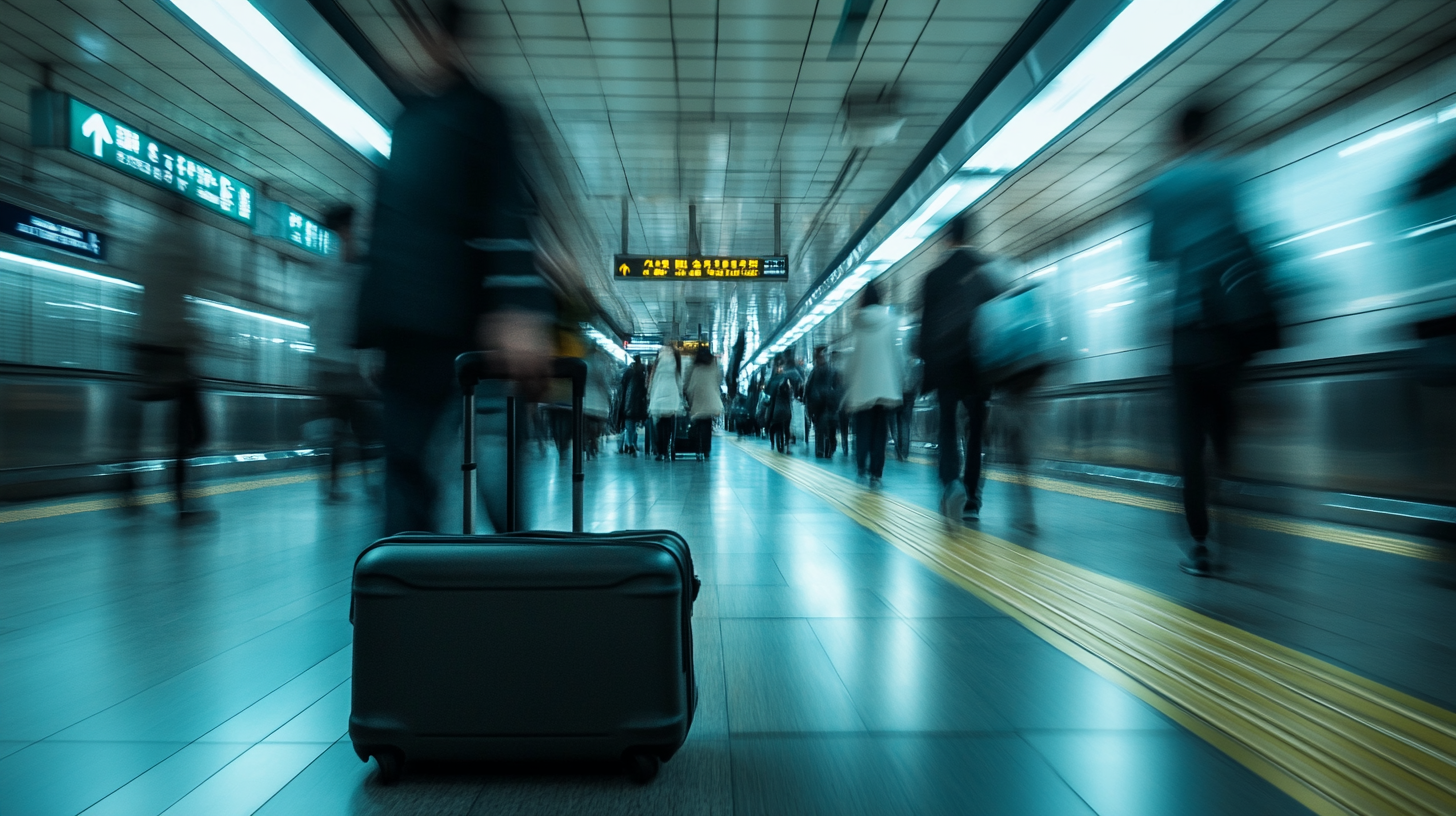
Movement Friction After Long-Haul Arrival
THE ARCHIVE // MOVEMENT NOTES
International arrivals into South Korea often introduce subtle movement friction during the first 24 to 72 hours after landing. A schedule may look manageable before the flight, but hydration shifts, sleep disruption, language processing, transportation sequencing, and environmental density can change how clearly a traveler moves through the first days.
This friction is rarely dramatic. It usually appears through smaller points of resistance: slower decisions, compressed rest windows, too much cross-district movement, difficulty processing multiple instructions, or the tendency to treat arrival day as fully usable time.
Arrival Compression
Late arrivals are especially vulnerable to compression. Airport exit, luggage retrieval, immigration, SIM setup, transport, hotel check-in, and basic settling can occupy more time and attention than expected. When this sequence follows a long-haul flight, the first evening often becomes less functional than planned.
District Density
Seoul is highly navigable, but not always low-friction. District density, transfer depth, walking distance, elevator access, traffic variability, and neighborhood pacing can significantly affect the first movement window. A plan that appears simple geographically may feel materially different under jet lag.
Cognitive Load
The first operational window after arrival often carries a higher cognitive load than travelers expect. Language processing, navigation, payment systems, transport choices, unfamiliar spatial cues, and basic orientation can compound quickly. For travelers arriving from distant time zones, this can affect how much structure should be placed into the first day.
Recovery Readiness
Recovery readiness is not determined by arrival alone. Sleep disruption, cabin dehydration, meal timing, movement fatigue, and sensory density can all influence how a traveler responds to appointments, consultations, shopping, restaurant plans, or structured activity in the early portion of a stay.
EIROE treats arrival as a planning variable rather than a neutral starting point. The first 24 to 72 hours are not simply a scheduling window. They are a transition period that can determine how clearly the rest of the trip moves.
Movement friction is not always reduced by adding more to the itinerary. In many cases, it is reduced by removing unnecessary decisions, controlling pacing, sequencing districts intentionally, and preserving recovery capacity before complexity is introduced.
The first days in Seoul become easier when the plan accounts for the body that has just arrived, not only the city waiting outside the hotel.
Strong arrival planning protects the rest of the stay by reducing avoidable friction before the traveler has to solve it in real time.
EIROE Studio // Archive Record
Movement Notes // South Korea
Published Within The Archive